Skip to content
Windage Partners | Team. Trust. Results.

ICE Turns to Disaster-Relief Firms to Build Detention Camps

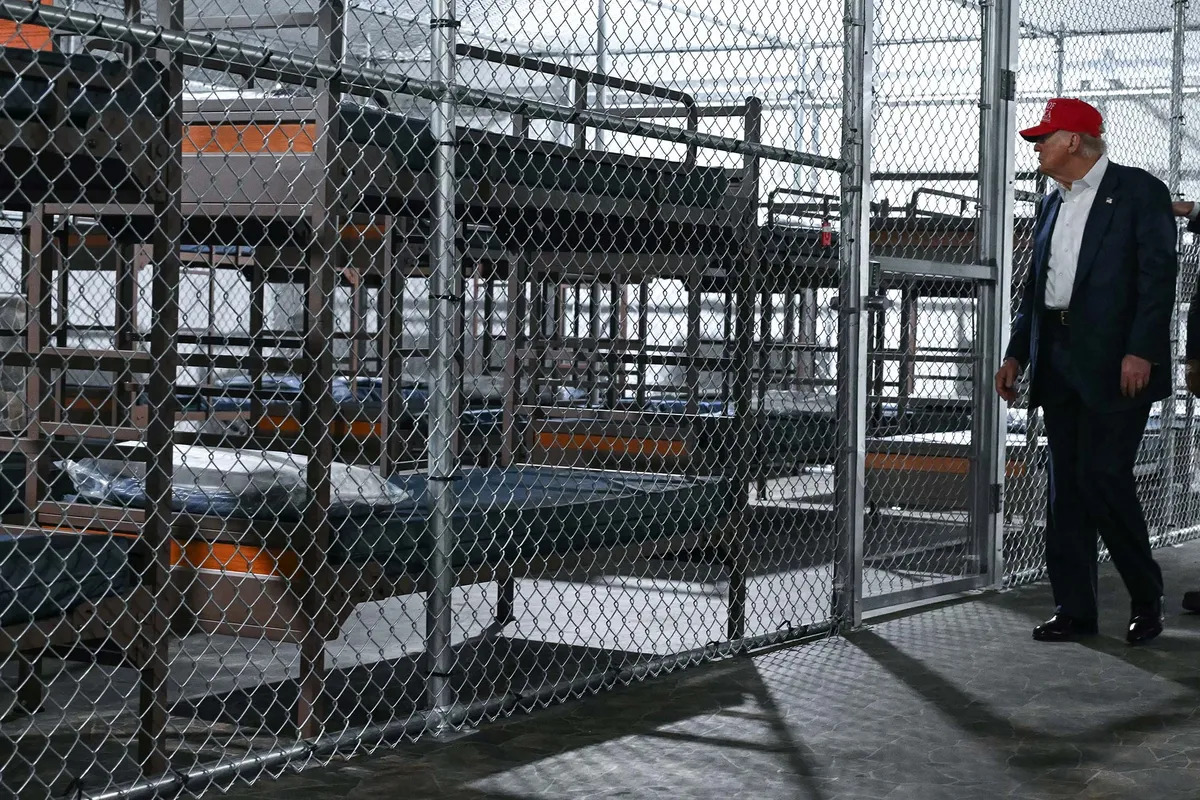
The federal government has awarded a contract to build and operate a sprawling tent camp at Fort Bliss, an Army base in Texas, to serve as an immigrant detention center.

In the Trump administration’s latest move to vastly expand space for such detention, the work would turn the base in El Paso, with more than 1 million acres and an airport, into a deportation hub with 5,000 beds, according to a US Department of Defense contract notice. That would make it the largest immigration detention facility in the country.
Faster Capabilities For Warfighters With Dual Defense Acquisition

As the Second Trump Administration prepares the defining document for defense strategy, its National Defense Strategy, there is no problem more important than acquisition reform since this determines how fast capabilities get to our warfighters. Strategies to deter and confront adversaries are hollow without delivering the hard power of new and more voluminous warfighting capabilities. Over the last decade there have been numerous acquisition reforms including the creation of the Adaptive Acquisition Framework (in the first Trump Administration) and the increasing use of Other Transaction Authority instead of the Federal Acquisition Regulations. The Second Trump Administration has accelerated this pace of reform with four Presidential Executive Orders and the Secretary of Defense’s “Software Acquisition Pathway” directive. Congress is also directing further reform included in the SPEED and FoRGED Acts which emphasize using commercial technology where possible. While all these reforms are headed in the right direction, the major drawback is the “one-size-fits-all” approach for all types of acquisition.

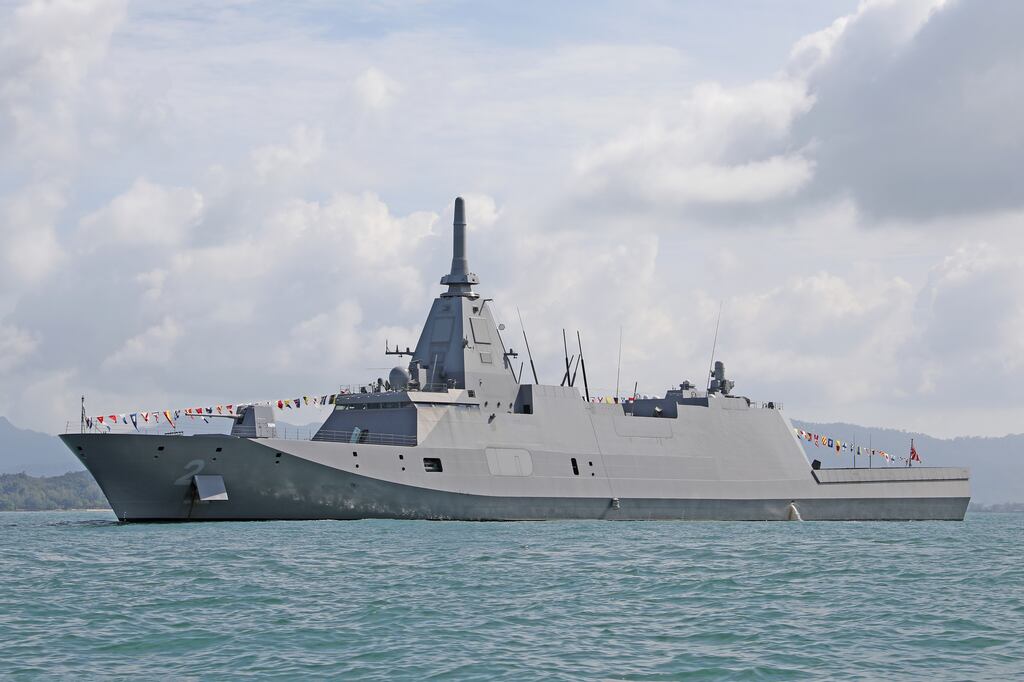
Japan closes in on biggest ever defense export with frigate selection

Japan has struggled to export cutting-edge defense equipment. However, past disappointments have been turned on their head after Japan won selection for a lucrative Australian frigate requirement worth up to US$6.5 billion.

With its shortlisting confirmed by Canberra on Aug. 5, Japan’s Ministry of Defense immediately tweeted that “we welcome this decision as it marks a major step toward elevating our security cooperation as ‘Special Strategic Partner’ to even greater heights.”

Army to grow air defense force by 30%

HUNTSVILLE, Ala. – The U.S. Army is planning to grow its air and missile defense force by 30%, according to the commander of the service’s Space and Missile Defense Command.

In addition to adding three Patriot battalions equipped with the Lower-Tier Air-and-Missile Defense Sensor, or LTAMDS, radar, the service will also add five Indirect Fire Protection Capability battalions and seven Counter-Unmanned Aircraft Systems batteries, Lt. Gen. Sean Gainey said Tuesday at the Space and Missile Defense Symposium in Huntsville, Alabama.

NATO sends warships to patrol Arctic waters

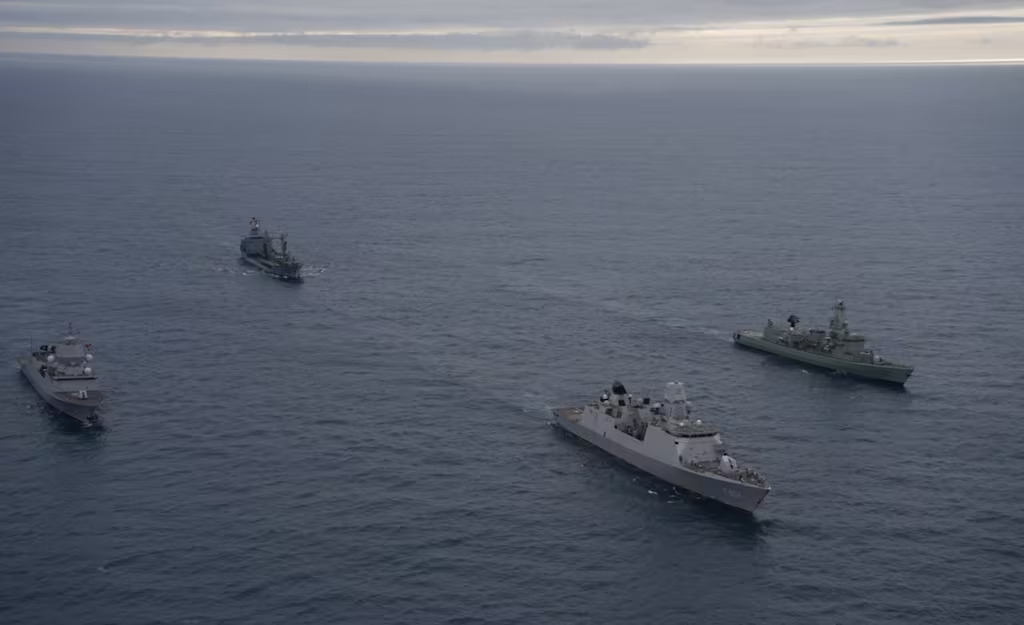
MILAN — NATO has deployed a maritime task group made up of Dutch, Norwegian, Portuguese, and German vessels to boost its maritime presence in the Arctic and High North.

The alliance’s maritime forces assigned to the Standing Maritime Group 1, or SNMG1, have been operating in the strategic waters since this week.

These include the flagship vessel De Ruyter from the Netherlands, the Thor Heyerdahl from Norway, the Bartolomeu Dias from Portugal, and the Rhön from Germany. Additional maritime patrol aircraft have been complementing the ships’ activities.

Titans, Trailblazers, and Translators: Forging a Unified Defense Industrial Paradigm

A foundational, and increasingly dangerous, tension defines the American defense enterprise. It is a narrative that pits industrial mass against digital velocity, the physics of building weapons against the logic of deploying software. On one side stand the titans of the traditional defense industrial base who forge the steel of American power. On the other are the venture-funded trailblazers of the tech world, who promise to blitzscale an intelligent, autonomous nervous system. For years, policymakers and pundits have framed this as a necessary competition. Yet this is a false dichotomy that fundamentally misunderstands the nature of modern conflict and, if left unaddressed, only helps America’s enemies.

Burgeoning Hedge Strategy Amplifies Commercial Technology In Defense

The President’s defense budget, released in June, embraces a vision of balancing traditional platforms with new digital technologies—a “Hedge Strategy”—at a pivotal moment for military modernization. This “high/low” approach, enables the U.S. military to complement its arsenal of (high) expensive defense platforms of ships, tanks and planes with new capabilities such as small, inexpensive, AI-enabled and upgradeable unmanned systems (low). Hedge Strategy is a term coined by Rear Admiral (retired) Lorin Selby and me in a paper we co-authored in 2022. Later that year, Rep. Ken Calvert, Chairman of the House Appropriations Committee—Defense (HAC-D), called for adopting new technologies—predominantly commercial technologies—as a hedge strategy and provided increased funding for the concept. Today, the vision is becoming a reality on a much larger scale.

Windage Operating Partner Bradley Hansell has been confirmed by the U.S. Senate as Under Secretary of Defense for Intelligence & Security

We are proud to share that former Windage Operating Partner Bradley Hansell has been confirmed by the U.S. Senate as Under Secretary of Defense for Intelligence & Security.

Brad stepped away from Windage to answer the call to public service, and his leadership, intellect, and commitment to country continue to make a profound impact on our nation’s security.

His confirmation follows the January appointment of former Windage Advisory Board member John Ratcliffe as Director of the Central Intelligence Agency—another valued colleague who left our team to serve the nation at the highest levels.

While we miss their insight and camaraderie, we are honored to have worked alongside such exceptional patriots. Their appointments are a testament to the caliber of individuals who shape the Windage community.

DOD Seeks to Deliver Innovative Capability at Speed, Scale

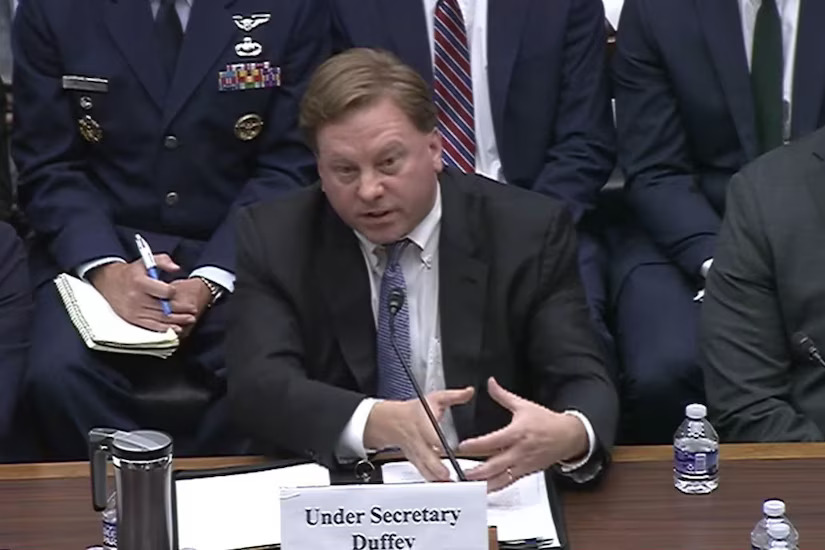
The Defense Department is at a critical juncture. It must transform how it delivers integrated capabilities to warfighters with speed, scale and operational relevance, said Michael P. Duffey, undersecretary of defense for acquisition and sustainment, who testified today at a House Armed Services Committee hearing on acquisition reform.

A man in a suit seated at a desk speaks as two people sit beside him and others are seated behind him.
Duffey said the department’s priorities include rebuilding a more resilient defense industrial base, utilizing rapid and flexible contracting authorities, utilizing multiyear contracts for things like munitions, cutting bureaucratic delays, reforming outdated processes and empowering the acquisition workforce to operate with agility and confidence.

Christian Brose on the Coming Revolution in Military Tech

Americans cheered earlier this summer when Ukraine managed to sneak inexpensive drones deep into Russia and use them to destroy strategic bombers. Likewise when Israel began its campaign against Iran by taking out air defenses with drones. New technology is changing the geometry of the battlefield, which can give a leg up for lesser powers—which could also pose threats to the U.S.

Is America prepared for the new way of war? “At every level, I think, our conception of military power, and the industrial base that we’ve been optimizing to build it, is just systemically wrong,” says Christian Brose, president and chief strategy officer of Anduril Industries, the defense tech company founded by entrepreneur Palmer Luckey.