Skip to content
Windage Partners | Team. Trust. Results.

More AUKUS subs, drones and munitions: UK strategic review aims for ‘warfighting readiness’

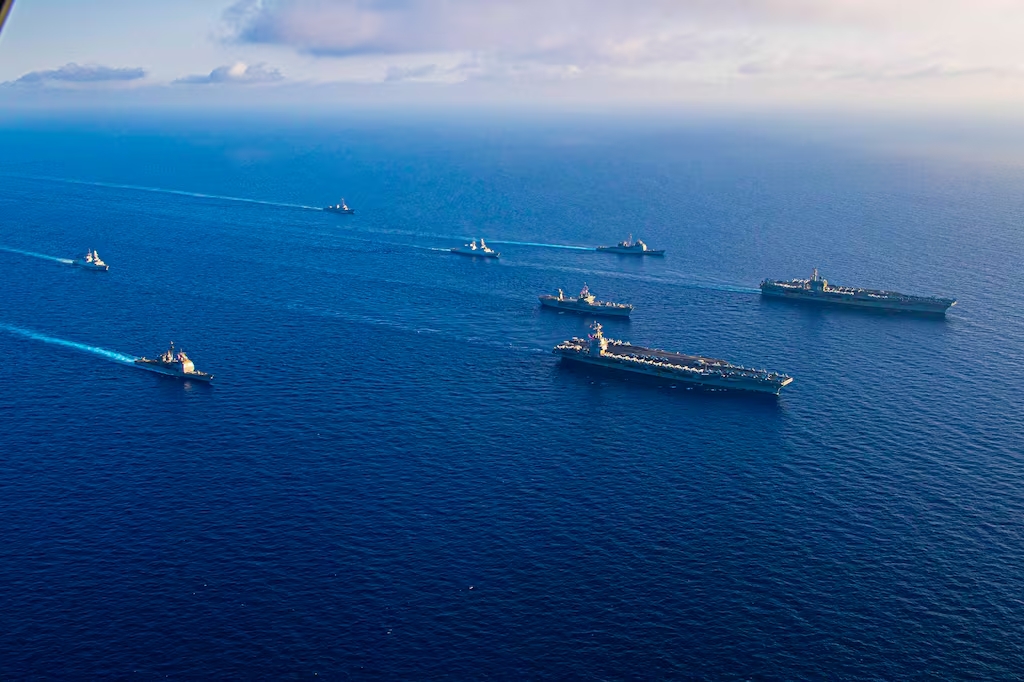
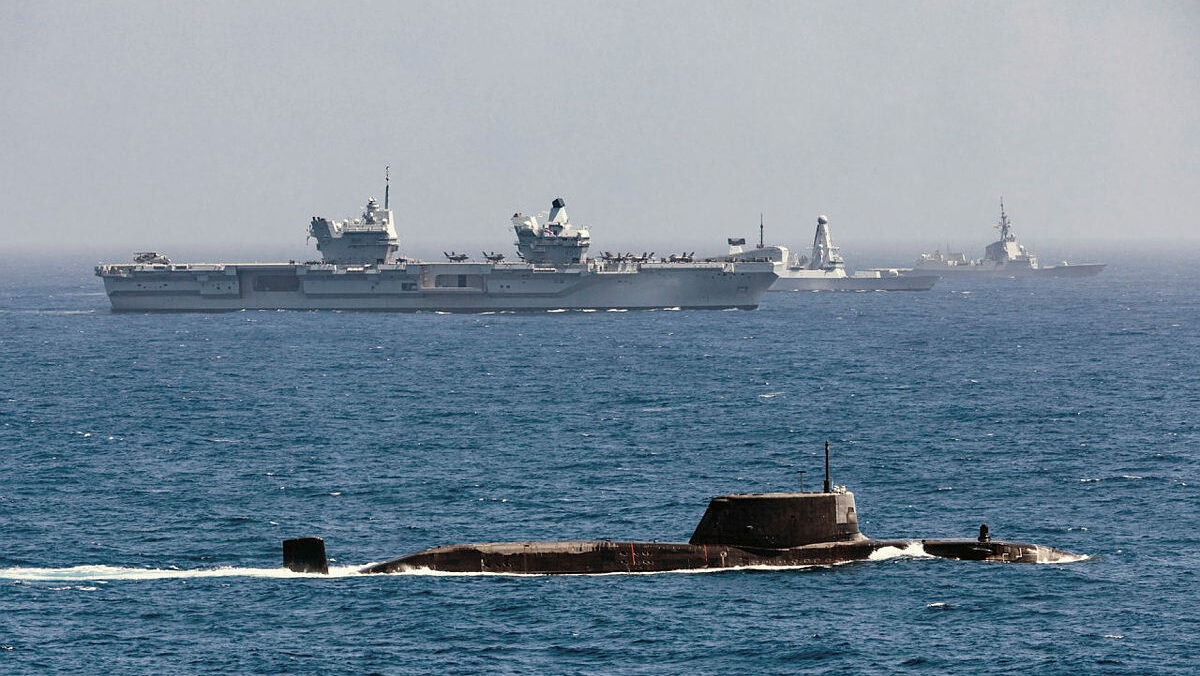
BELFAST — The UK is set to release an ambitious defense review today, reorienting its armed forces toward “warfighting readiness” to deter Russian aggression.

Although filled with dozens of recommendations, the Strategic Defense Review (SDR) is headlined by plans to acquire “up to” a dozen nuclear-powered attack submarines (SSN) under the trilateral AUKUS program, new investments in AI, long range weapons, cyber capabilities and a major warfighting concept inspired by lessons learned from the Ukraine war.

“We are moving to warfighting readiness, as the central purpose of our armed forces. When we are being directly threatened by states with advanced military forces the most effective way to deter them is to be ready,” Prime Minister Keir Starmer said earlier today at BAE Systems Govan shipyard in Scotland and ahead of the formal launch of the strategic document.

Allies are more than customers of America’s defense industrial base. They can help rebuild it

Trump administration officials speak often of the responsibility of American allies and partners to do more for the common defense.

The good news for Washington is that most of those countries agree. This is particularly true in Asia, where Australia, India, Japan, and South Korea are increasingly unsettled by Chinese maritime coercion. In response, they have sought to build-up their military capabilities and deepen their cooperation with the United States in the interests of preserving a favorable balance of power.

Yet there are differences between the administration and its allies over how best to burden share. Trump’s team have touted larger and more timely Foreign Military Sales as their preferred means for doing so. But for many allies, simply buying American weaponry — much of which won’t arrive for years — is no longer enough. They want to help design and build it, too.

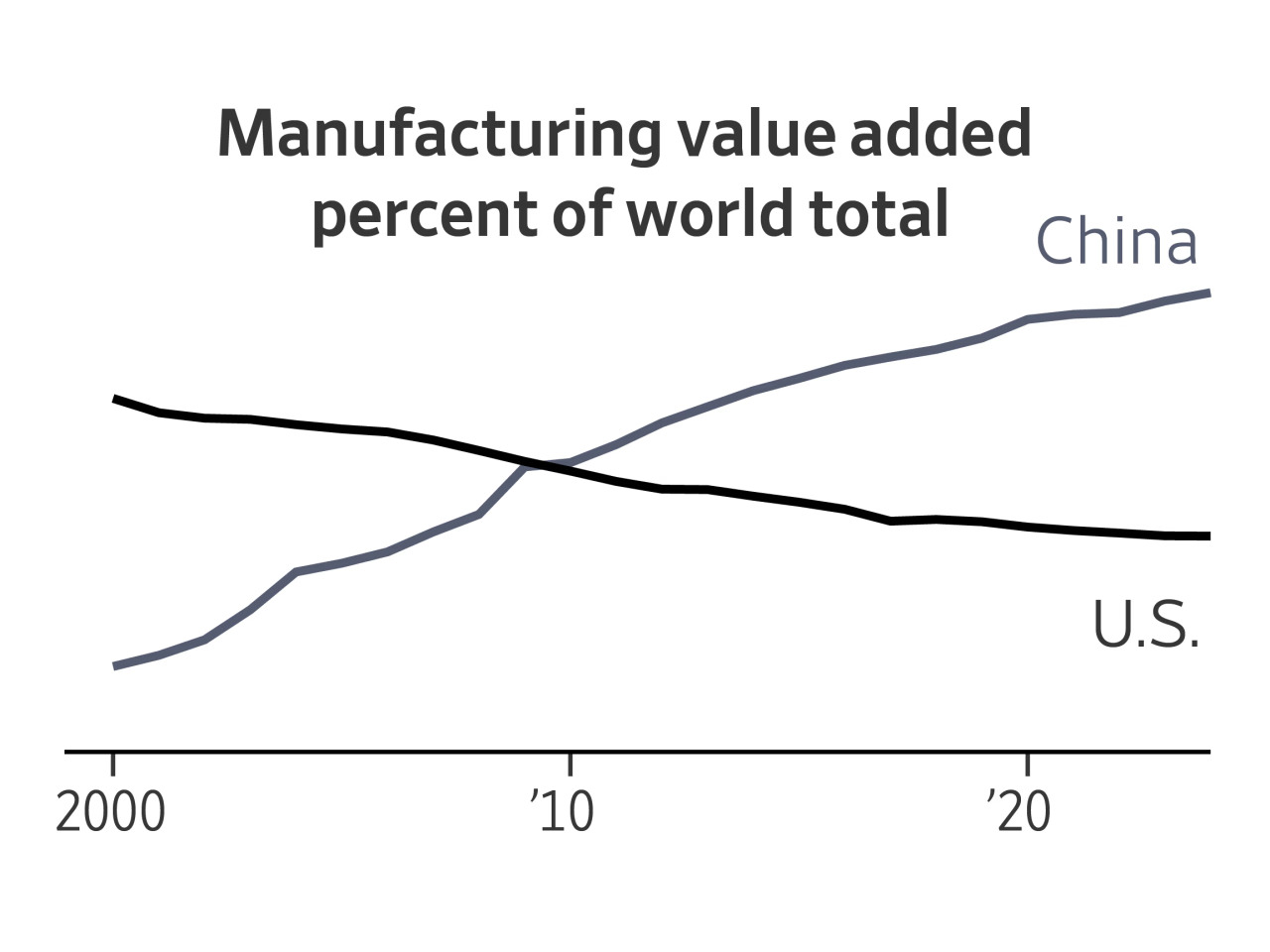
America Let Its Military-Industrial Might Wither. China’s Is Booming

Adapting to the dual challenge of China’s military and its economy has been a focus of U.S. administrations for years. America is losing ground.

Modern warfare is a contest of industrial might, as Russia’s invasion of Ukraine has shown. Both sides are burning through arsenals of artillery shells, rockets and military vehicles. Automated factories now spit out drones day and night. Even an old-fashioned howitzer requires precision manufacturing.

‘Lean and mean’: Hegseth releases new memo limiting IT consulting work 

WASHINGTON — Defense Secretary Pete Hegseth has directed the Pentagon to strictly limit its use of IT consulting and management contracts, pushing more reliance on in-house resources, according to a newly released memo.

“While we rely on our vital industrial base to deliver cutting-edge technology and support, we must in-source more expertise and harness the unparalleled talent of our existing experts to drive financial efficiency and operational strength,” Hegseth wrote. “We will become lean and mean, eliminating wasteful practices and reallocating resources to fortify our strategic edge.”

Maintenance costs will spike as militaries add advanced planes: Report

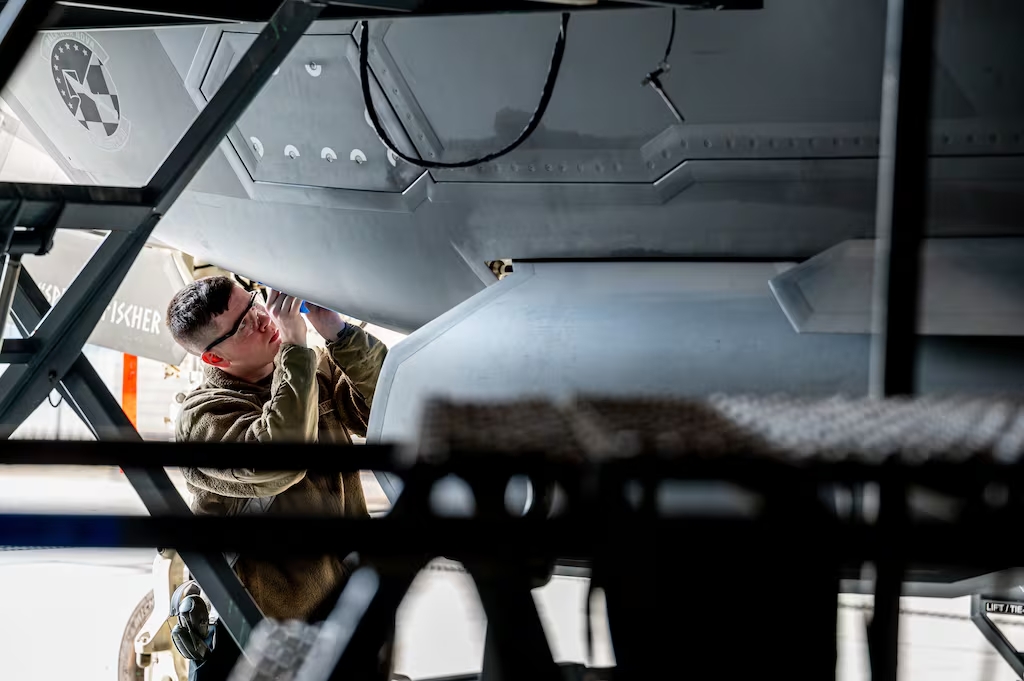
The costs of maintaining, repairing and overhauling military aircraft is likely to spike worldwide in years to come as advanced planes make up a growing portion of fleets, according to a new study from consulting firm Oliver Wyman.

In the report, analysts Doug Berenson, Livia Hayes and Ian Ferguson said the global market for maintenance, repairs and overhauls of military aircraft — or MRO — totaled about $97 billion in 2025, and remained roughly flat over the preceding six years.

Navy wants AI tools to boost data processing, resource distribution

The Navy is working with the Defense Innovation Unit to use artificial intelligence and machine learning to process the vast quantity of data it receives and make sense of it for commanders.

In a May 22 notice, DIU said it is looking for AI and machine learning applications that can speed up data processing times at the Navy’s Marine Operations Centers, which take in information gathered by platforms in space, at sea, in the air and through intelligence reports and other means.

Trump estimates Golden Dome will cost $175B over 3 years

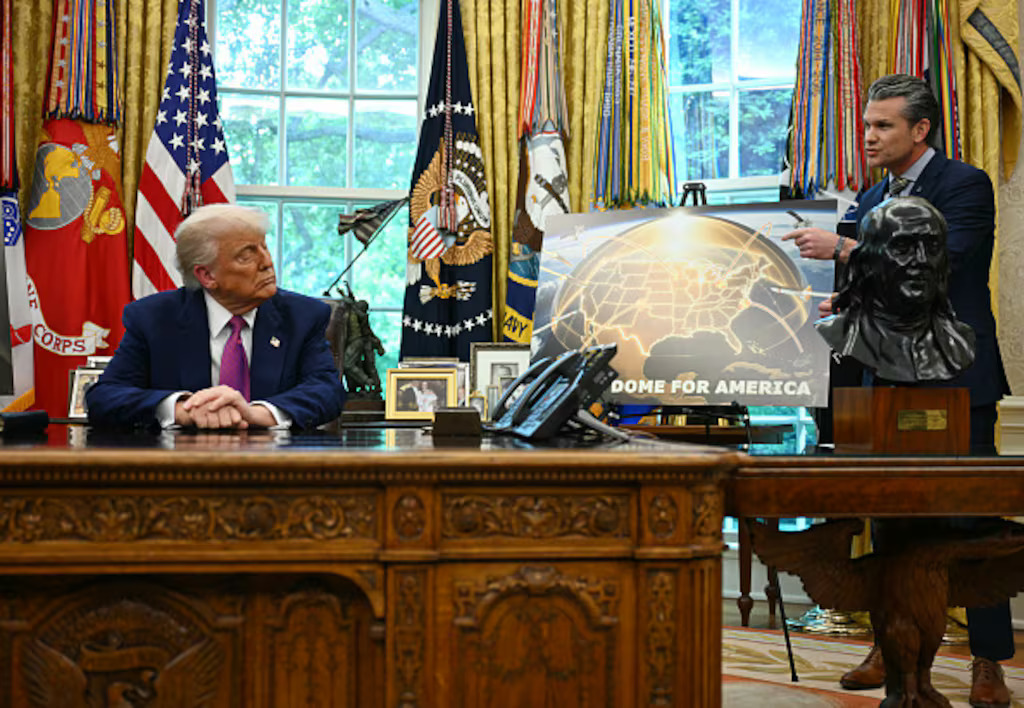
In an Oval Office reveal Tuesday, flanked by U.S. military generals and Republican senators, President Donald Trump offered new details about his ambitious Golden Dome missile shield project, which he expects to have a price tag of around $175 billion and be completed before the end of his term.

“I’m pleased to announce that we have officially selected an architecture for this state-of-the-art system that will deploy next-generation technologies across the land, sea and space, including space-based sensors and interceptors,” Trump said. “Once fully constructed, the Golden Dome will be capable of intercepting missiles even if they are launched from other sides of the world, and even if they’re launched from space. And we will have the best system ever built.”

Army Experiment Brings Military Closer to Joint All-Domain Command, Control Goal

ADELPHI, Maryland — In a nondescript room at an Army Research Laboratory facility just outside Washington, D.C., a small group of reporters donned augmented reality headsets.

Laying before them in a virtual 3D reconstruction was a full view of a large chunk of Nevada and Southern California, expanding out to the Pacific Ocean.

The Augmented Reality Sandtable — a product developed by defense contractor Anduril — was populated with green laser-like links shooting upwards, representing connectivity to satellites and high-altitude balloons carrying communications payloads. Purple and pink beams represented radars, and light pink beams symbolized electronic warfare jamming.

Virtual representations of tanks, robotic vehicles, artillery sites and fixed and rotary wing aircraft populated the desert, and small watercraft and ships gathered near San Clemente Island.

Hegseth champions special operations as the force for today’s threats

TAMPA, Fla. – The secretary of defense championed special operations forces as a key leader in the Pentagon’s priorities of maintaining high standards and meeting threats with asymmetric tools.

“Special Operations have never been more important in our country,” Defense Secretary Pete Hegseth said at the annual Global SOF Foundation Special Operations Force Week in Tampa.

Hegseth noted that over the past three years SOF-specific missions have risen by 200%. And over the past six months, SOF units have killed 500 enemy combatants and captured another 600 in operations throughout the globe, Hegseth said.

Space Force weighs options for boosting launch resiliency, capacity

The Space Force is eyeing options to increase its launch capacity and resiliency as demand for U.S. national security and commercial launch continue to strain existing launch infrastructure.

Brig. Gen. Kristin Panzenhagen, who serves as program executive officer for assured access to space and oversees the service’s launch range operations, said this week the service is exploring a range of leads for increasing launch access — from new spaceports to international partnerships to newer models like sea-based launch. At the same time, it’s also investing in overburdened infrastructure at its current sites.