
Skip to content
Windage Partners | Team. Trust. Results.

The World’s Top Jet Fighter Is About to Get More Expensive

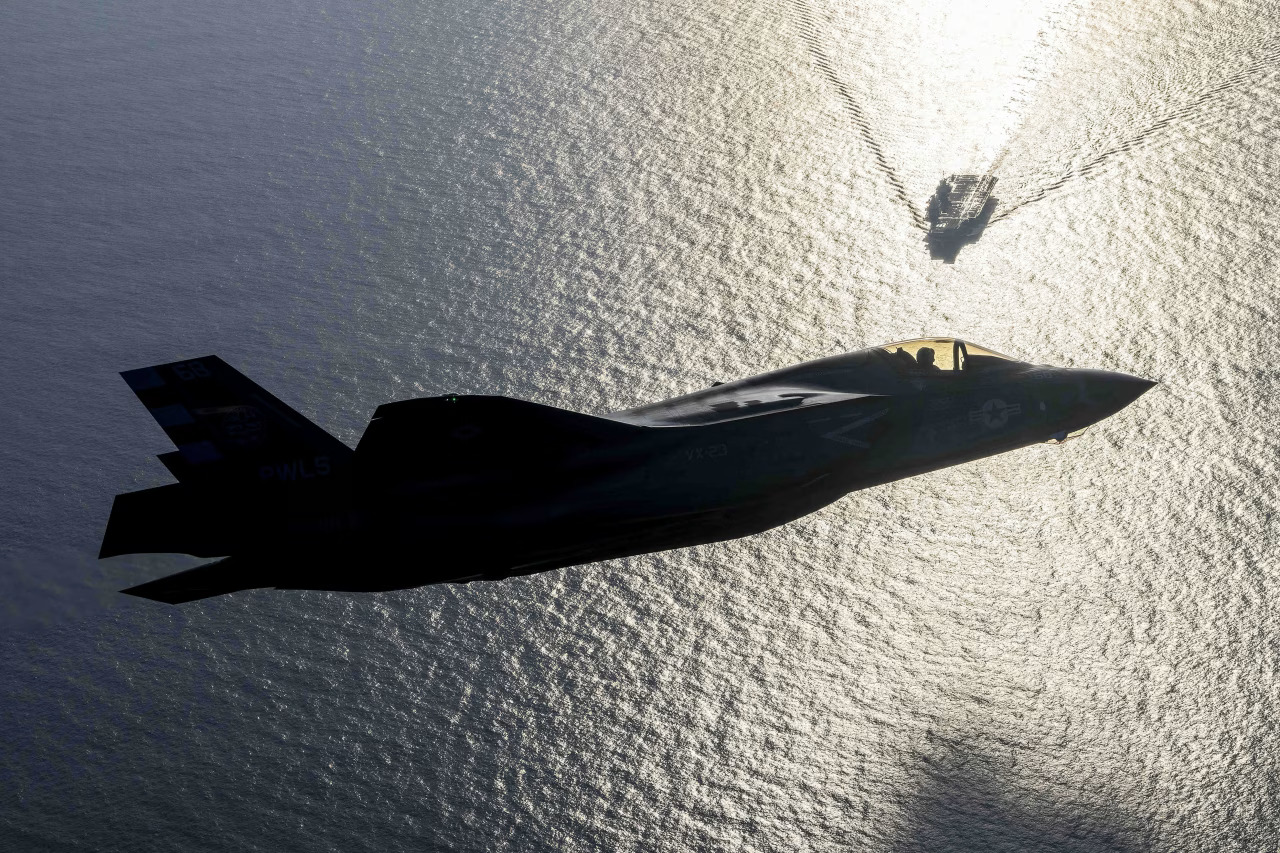
The F-35 is a symbol of U.S. military and technological might. It is also reliant for more than 80 parts on a little-known company based in a quiet Danish suburb.

Overall, the jet fighter, made by Lockheed Martin, has more than 1,900 suppliers from about a dozen countries that provide everything from tiny chip boards to the ejector seat.

The F-35’s sprawling supply chain is one example of how even the U.S. defense industry, which exports billions of dollars worth of weapons while importing few in return, could be challenged by the Trump administration’s sweeping trade policies.

Amazon’s Project Kuiper partners with L3Harris to develop military communication solutions

WASHINGTON — Amazon’s satellite internet company, Project Kuiper, is forging ties with the defense sector, signaling a strategic push beyond commercial broadband into government and military communications.

Kuiper Government Solutions (KGS), a subsidiary of Project Kuiper, has partnered with defense contractor L3Harris Technologies to shape satellite payloads that meet the standards of military and public safety users.

Space Force embraces commercial tech in major overhaul of surveillance satellite program

WASHINGTON — In a significant departure from traditional defense procurement practices, the U.S. Space Force is moving to replace its specialized military satellites used for geostationary surveillance with systems built and operated by commercial vendors, a shift aimed at expanding supplier diversity and tapping into the private sector’s capabilities.

Maj. Gen. Stephen Purdy, the Space Force’s top acquisition official, on April 29 signed off on a new acquisition plan that will replace the Geosynchronous Space Situational Awareness Program (GSSAP) constellation—currently a bespoke set of satellites built solely for military use—with commercially developed alternatives.

The long, slow death of defense primes. Or is it?

For several years, the market, commentators, and the public have debated the slow decline of major defense primes. These companies have faced rising costs, stagnant budgets, supply chain constraints, societal changes, and aggressive disruptors. However, recent geopolitical tensions, including conflicts in Ukraine and the Middle East, and rising defense budgets suggest that now is the time for primes to reinvent themselves. This paper examines the background to this perception, the realities, and the steps primes can take to be in a better position.

Lockheed wants to turn F-35 into a ‘Ferrari’ with sixth-gen tech

Lockheed Martin plans to fold technologies it developed in its unsuccessful bid for the Air Force’s Next Generation Air Dominance platform into the F-35 and F-22 Raptor to create a “supercharged” fifth-generation fighter, company executives said.

Lockheed CEO Jim Taiclet told investors in a Tuesday earnings call the company is not going to challenge the Air Force’s March 21 decision to award the F-47 contract to Boeing. Instead, he said, the company will focus on upgrading the F-35 and F-22 Raptor fighters with sixth-generation technology.

Space Force gets head start on Trump’s commercial buying push

A sweeping Space Force acquisition review geared toward finding avenues for more commercial integration appears to have given the service a head start in aligning with several Trump administration directives aimed at reforming defense acquisition and pulling more private sector capabilities into the federal government.

Late last year, former space acquisition executive Frank Calvelli and Vice Chief of Space Operations Gen. Michael Guetlein directed the service’s acquisition offices to scour their programs for opportunities to bring in more commercial capabilities.

Trump signs shipbuilding order as Navy leaders call for 381-ship fleet

President Donald Trump on April 9 signed an executive order aimed at revitalizing an American shipbuilding industry that has fallen well behind production levels of its rivals from the People’s Republic of China.

Language in the executive order, which cites the need to strengthen a “commercial shipbuilding capacity and maritime workforce,” mirrors many concerns expressed among the industry’s defense counterparts.

New Executive Orders Seek to Improve Acquisition in the Defense Industrial Base

President Donald Trump on April 9, 2025, signed three executive orders (EOs) focused on accelerating defense procurement, improving foreign defense sales between the U.S. and its allies and revitalizing American maritime industries. This Holland & Knight alert summarizes these new EOs and provides insight on what defense contractors should expect moving forward.

New Defense Department experimentation series targets data integration

The Pentagon’s Chief Data and AI Office has launched a new series of experiments focused on improving data integration to allow operators to take better advantage of new command-and-control capabilities.

The office runs a regular experimentation event every 90 days called the Global Information Dominance Experiment, or GIDE, which is focused on taking capabilities designed to connect forces across domains and test them in an operational context. The events have been credited for helping the Defense Department turn a long-abstract concept called Combined Joint All-Domain Command and Control into capabilities the military is now using in the field.

US Army punches the gas on Next-Gen Command-and-Control

Coming out of an entire career in the operational Army, Maj. Gen. Patrick Ellis, now the director of the Army’s command-and-control modernization, said it hasn’t been uncommon in the field to see critical data jotted down on a piece of cardboard in the back of a platoon sergeant’s tank.

“There’s probably a headquarter somewhere today at an exercise where an intel officer is going to write everything down on a piece of sticky note that came out of his intel system, walk across the [Tactical Operations Center], hand it over to the fires guy who has to type it into the fires system to make it work,” he said in a Monday press briefing at the Pentagon. “We realize this is just not the approach to speed that we need in the United States Army.”